
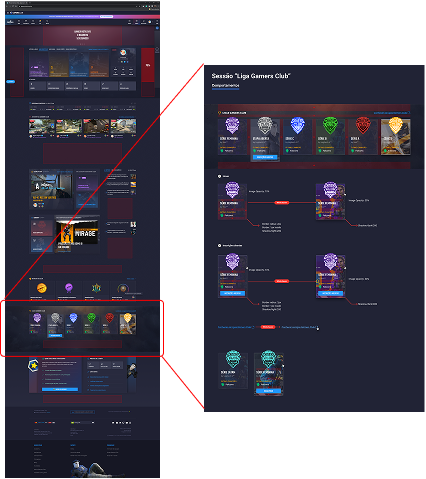
3 weeks, 1 event, and a home nobody was using
A full home redesign for Brazil's largest competitive gaming platform, shipped in 3 weeks. Making it appealing to our users and detailing all the interactions and user feedback.
A gamification redesign for a Brazilian trading community where expertise had quietly become a barrier to belonging.
TradersClub (TC) is a community for Brazilian traders. Members post their own trades, follow market news, and take courses from well-known traders. That content, real trades and real reasoning, is some of the platform's best material.
Belonging and empowering our users were the brand. TC didn't sell content, it sold a place to participate with the best.
| Role | Product Designer (Mid-level) |
|---|---|
| Focus | End-to-End UX&UI, Behavioral Research, Recognition System, Community Design |
| Collaborators | Product Manager, Business, CX, Content Managers, Design Systems, Legal, and Engineering |
| Timeline | 2 months | Q2 2021 |
TC came to us with a simple brief: build gamification to improve engagement and retention. At that point, that's all we knew. The platform already had a seniority ring, badges, and rankings in place, so this looked like a turning problem, not a structural one.
I led discovery and design independently, from the first interview to final handoff. I worked alongside a Product Manager, Engineering, and CX.
What mattered most wasn't the screens. It was three judgment calls:
The work also went beyond this project. It landed well enough that stakeholders later asked me to bring the same thinking to four other squads. (more on that below)

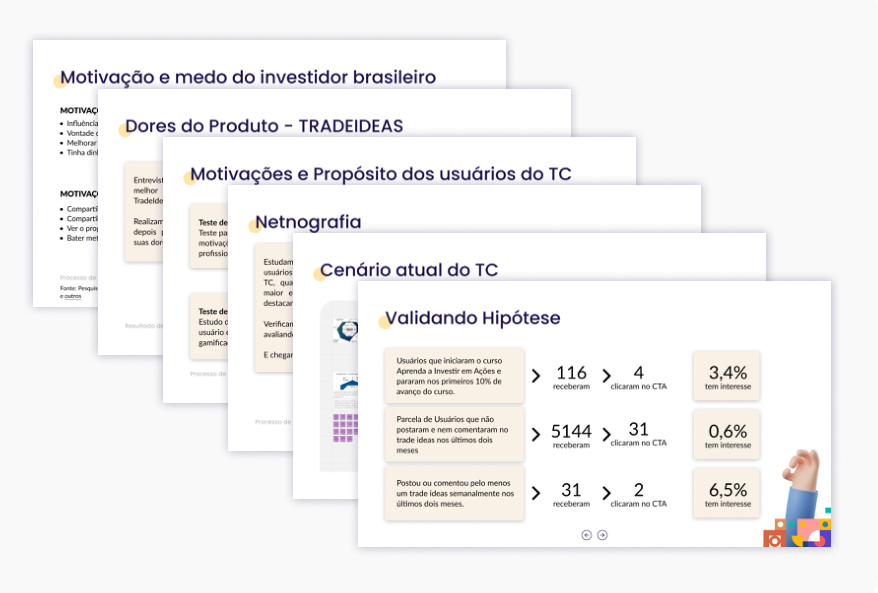
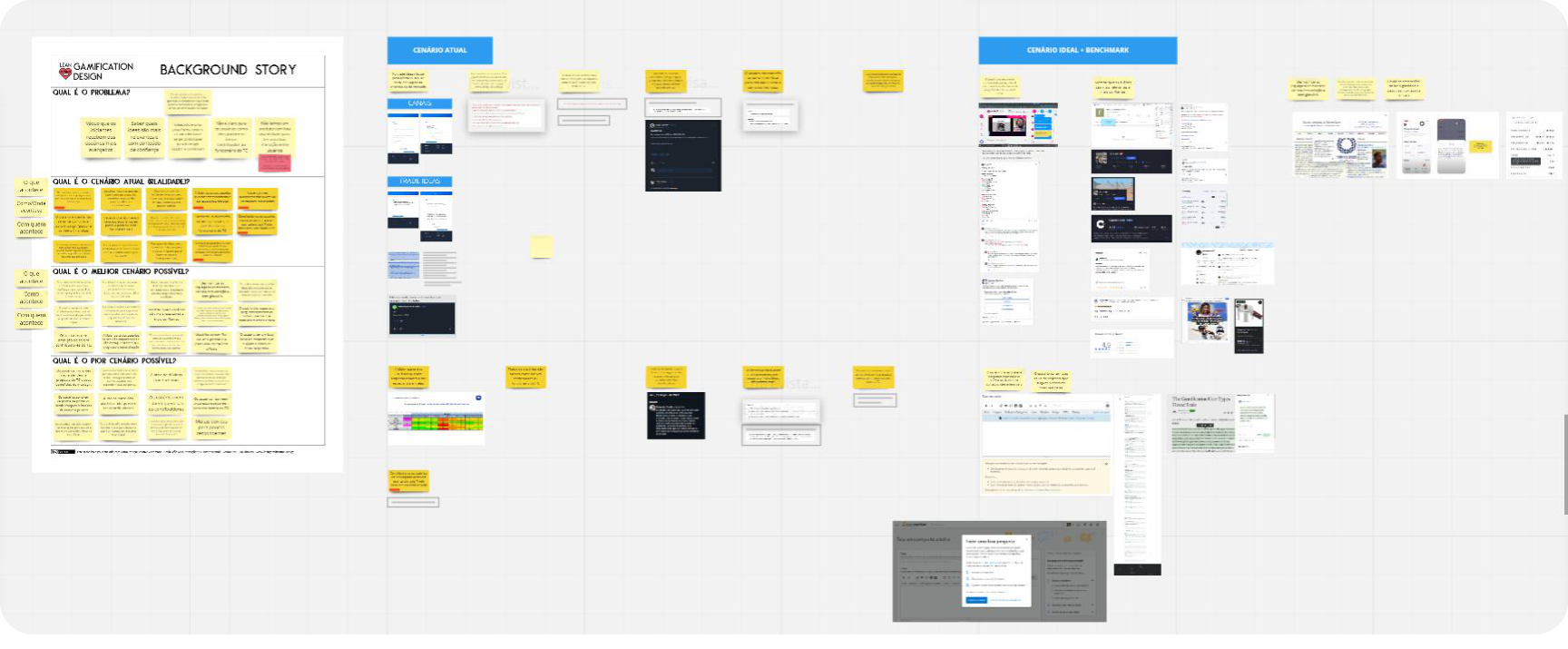
The brief assumed we knew what was broken. I didn't want to design on that assumption. Gamification only works when you understand the motivations and fears of the user, so I ran 5 research methods in parallel: desk research, surveys, netnography, and interviews to understand the users and a desk research to analyze the current TC gamification strategy. Each one peeled back a layer.
Desk research across published studies of the Brazilian retail investor
(Yubb, B3 2020, ValorInveste, Xpeed, Schroders Global Investor Study 2020, among others).
Influence of friends and influencers, the desire to learn how to invest, improving their quality of life, having money saved up.
The thought that "investing is only for the rich," not wanting to face their own financial history, believing they don't have enough money, difficult language, insecurity and lack of knowledge, the feeling that they won't make it.
Sharing what they've learned, sharing wins and plans, seeing their knowledge progress, hitting goals and watching their money grow.
Investors who see themselves as "experts" prefer to look for information at banks or with independent advisors (48%), followed by wealth managers (35%) and insurance companies (34%). At the other end, self-declared "beginners" are more likely to follow friends' advice (36%) or do the research on their own (31%).
A test mapping the user's professional growth motivations. The following stood out:
being in control of their own destiny
more choice and decision-making power
wanting to test their knowledge and skills
Study of user behavior on gamified platforms. We found that users engage with mechanics of:
Socialization
Teamwork
Belonging
Highlights: Autonomy, Independence, and Technical-Functional Anchors
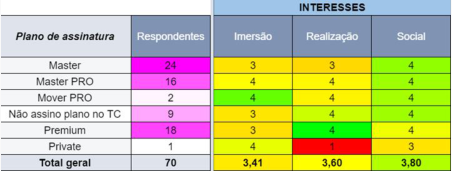
Regarding our users' interest as players, the distribution is fairly uniform with a slight emphasis on SOCIAL.
5 out of every 6 questions ended in silence.
I manually studied user behavior across TC's communities: every chat channel plus TradeIdeas (like twitter to post trade ideas), over one month of activity. Three patterns emerged:
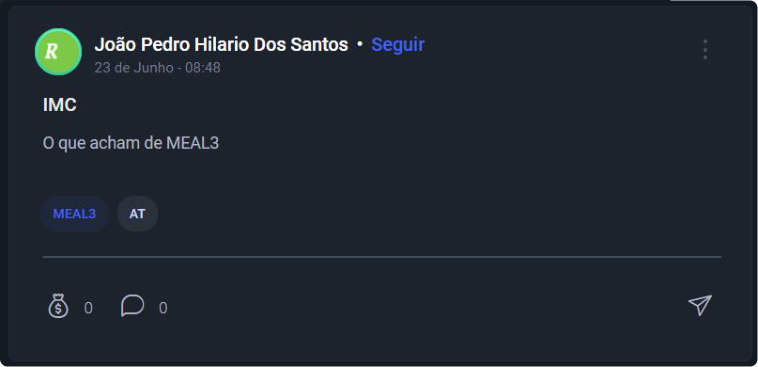
5 out of 6 users who ask a question in the chat channels or in Ideas comments get no answer, not even from contributors (users who were contacted by TC to create posts).
In the most conversational channels, 1 in every 2 users asking for help or for company suggestions gets no reply.
The posts that perform best explain their reasoning from basic to advanced, and their authors answer the comments.
Every existing mechanic rewarded status, not effort. The seniority ring: passive. The ranking: tied to likes, dominated by TC's own partners. Badges: confusing, tied to payment. And beginners told us the cost: "I don't feel ready to post." "I tried once, and the post was banned."
I interviewed 9 (4 beginners, 5 experienced) users:
75% of beginners and 40% of experienced users reported the same pains:
"I don't feel ready to post an Idea."
"I posted a question in Ideas as soon as I joined, and CX redirected me to the channels."
"I regret not posting my Ideas and then watching them play out right."
"I tried to post once, and the post was banned. The explanation was that it didn't give the community information enough."
"In the beginning I was confused about the best practices for posting. Had to ask a contributor"
Beginners weren't uninterested. They were afraid of getting it wrong in public.
Every mechanic rewarded who the user already was. None rewarded what they did for the community.
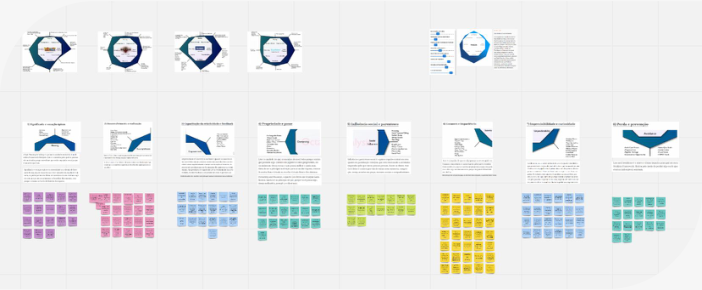
Using the Yu-Kai Chou framework, I mapped every gamification mechanic on the platform. The problem wasn't lack of gamification. It was excess of it, pointed at the wrong things.
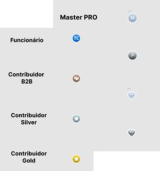
Seniority ring. Fully passive. The user does nothing to earn it, and it exists to inform others, not to reward the member wearing it.
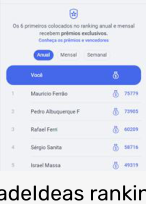
TradeIdeas ranking. Tied only to likes. Perceived as unfair: TC's own partners were always on top.
Badges. Criteria mix what you pay with jobs held at TC. None of it represents effort.
The fear wasn't about money. It was about being judged by people who knew more.
No path from student to member, in a product that sells belonging.
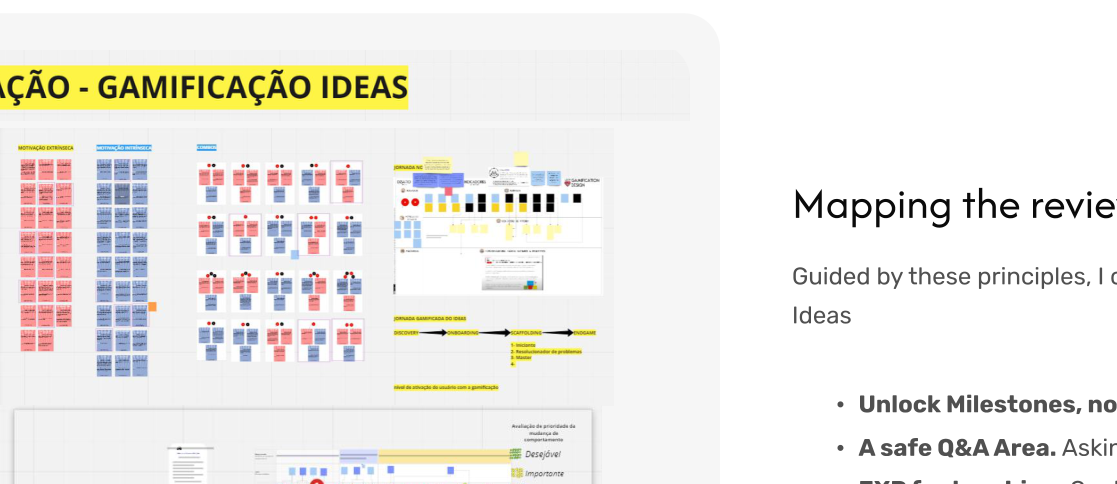
The research became four principles. Every mechanic we designed had to pass through them.
Empower creativity and personal strategy: the system always offers more than one way to reach the same result.
Every engagement mechanic revolves around the community, privileging the users who show up for others.
The journey has marks. Reaching them unlocks new and better abilities, not just points.
Elements that, once earned, make climbing to the next levels easier.


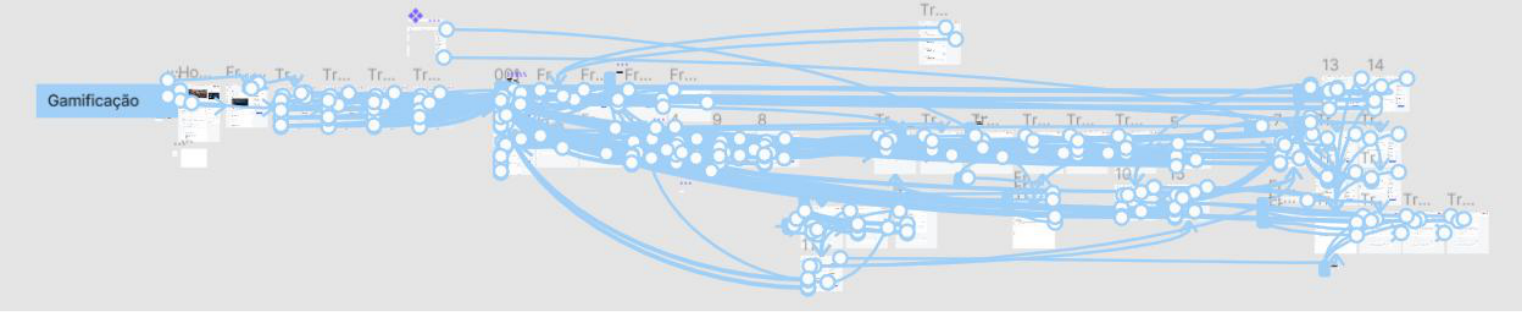
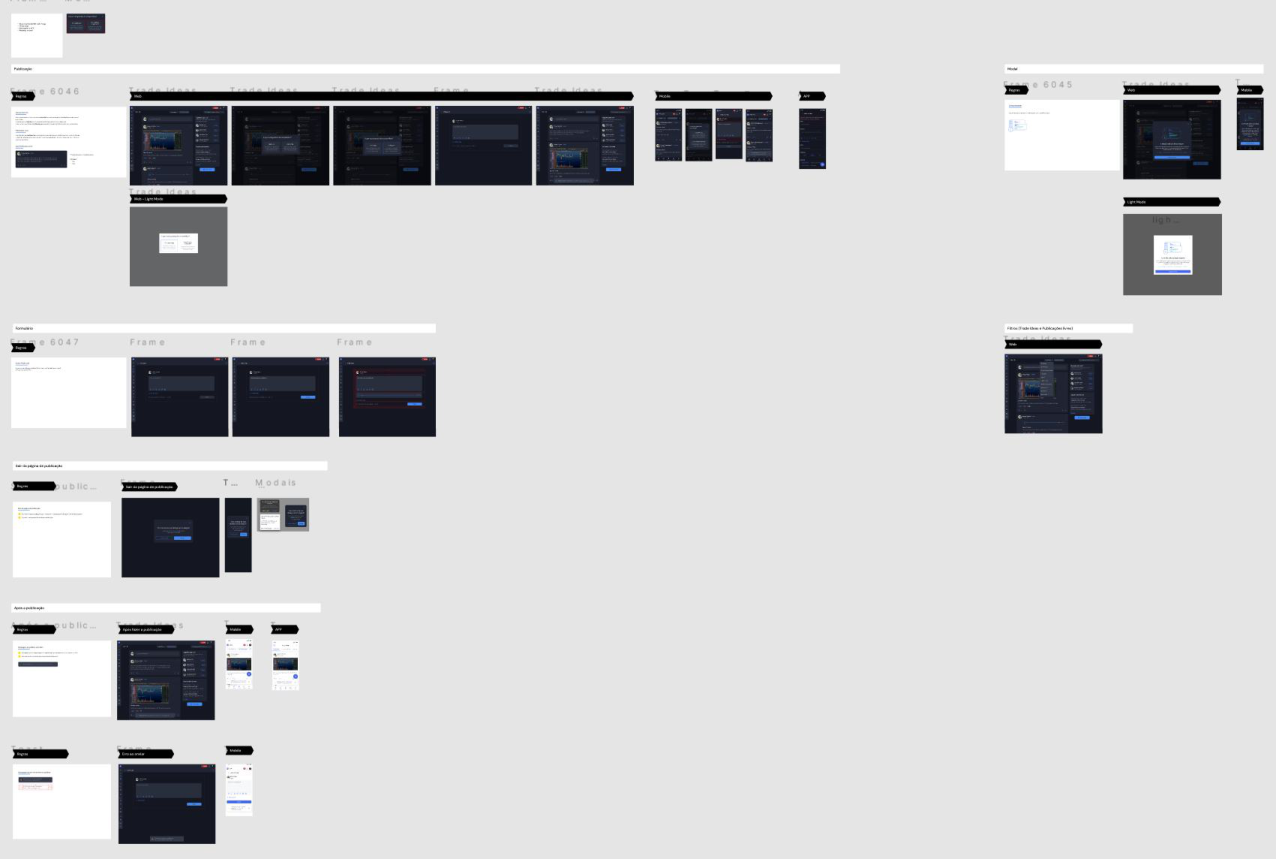
Guided by these principles, I created a seamless user flow for Trades Ideas
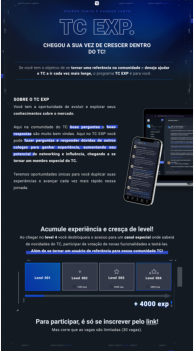
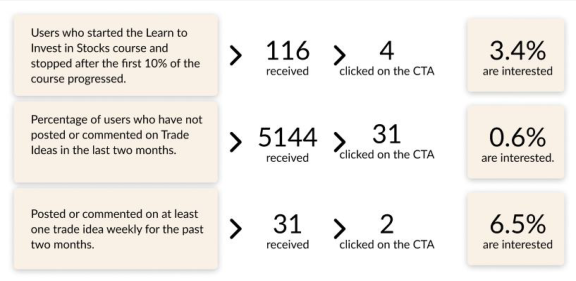
Before designing anything, I put the core assumption at risk: is belonging the real reward? A segmented email invited users to become community references.
Success criterion set upfront: TC's campaigns averaged 0.5% clicks; 1% would confirm the direction
We explored how to merge the Reviewer Profile and Sampling Program into one cohesive experience.
Active users clicked at 11× the rate of inactive ones. Small samples, directional read. But unambiguous: a system built to "reactivate" dormant users would target the wrong audience. The opportunity was deepening the engagement of who was already inside.

While the code waited, we ran the system by hand
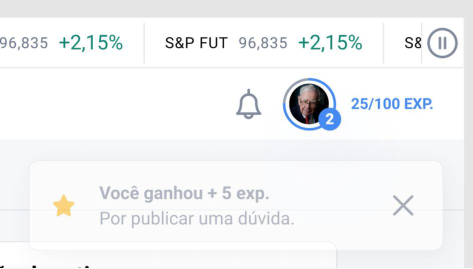
We launched TC Evolution, we rebranded the email experience as a minimum lovable product: the entire recognition system operated manually. I updated every participant's score by hand, every day.
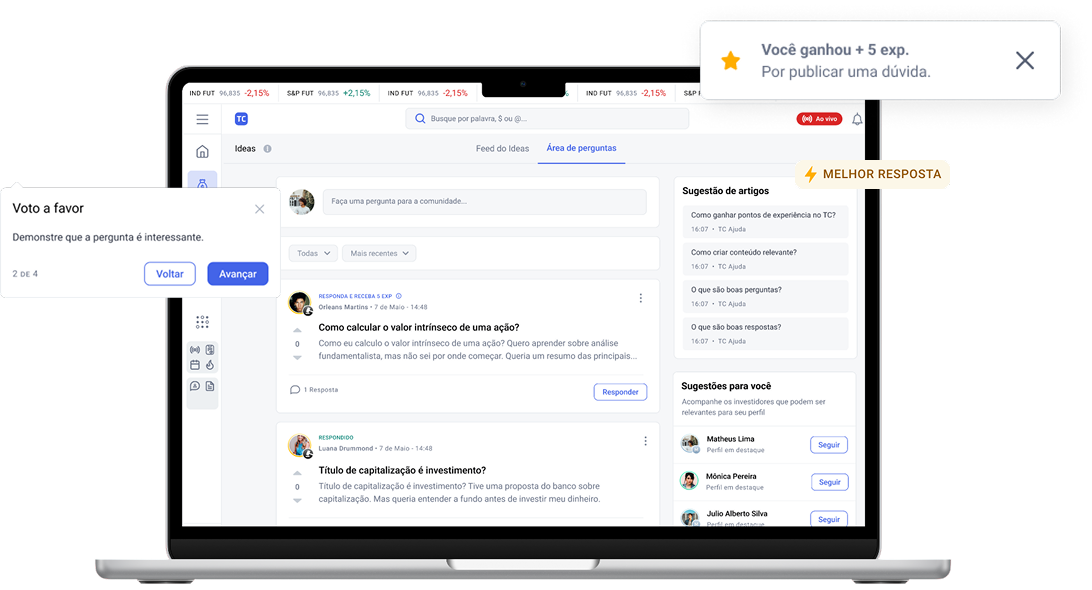
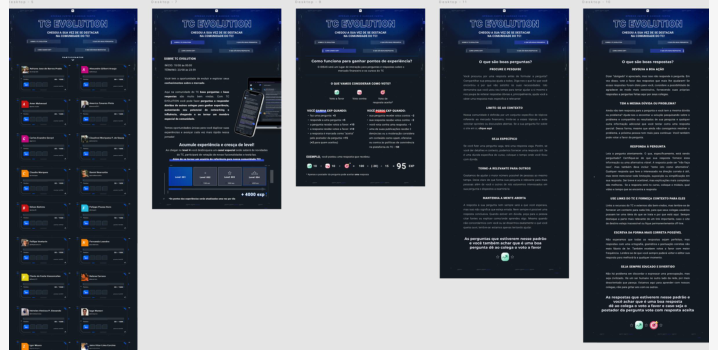
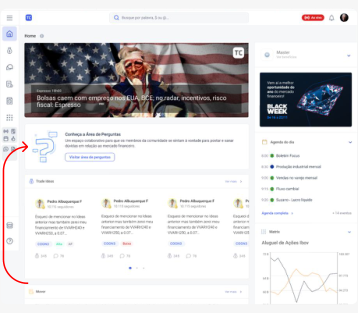
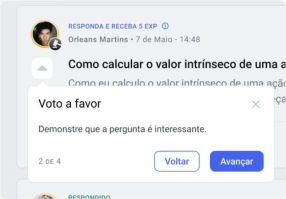
We prototyped the Q&A Area: a space where beginners ask their questions about the market, and contributors and experienced users answer them, advancing their own career plan inside TC.
We tested with 3 users: 2 experienced, 1 beginner. All of them struggled during the usability test.

Users didn't notice the design changes we made or the Q&A area we added, even with the banner announcing the new experience.
So we made the following improvements:
Then we ran usability tests again and the issues found in the first version were resolved.
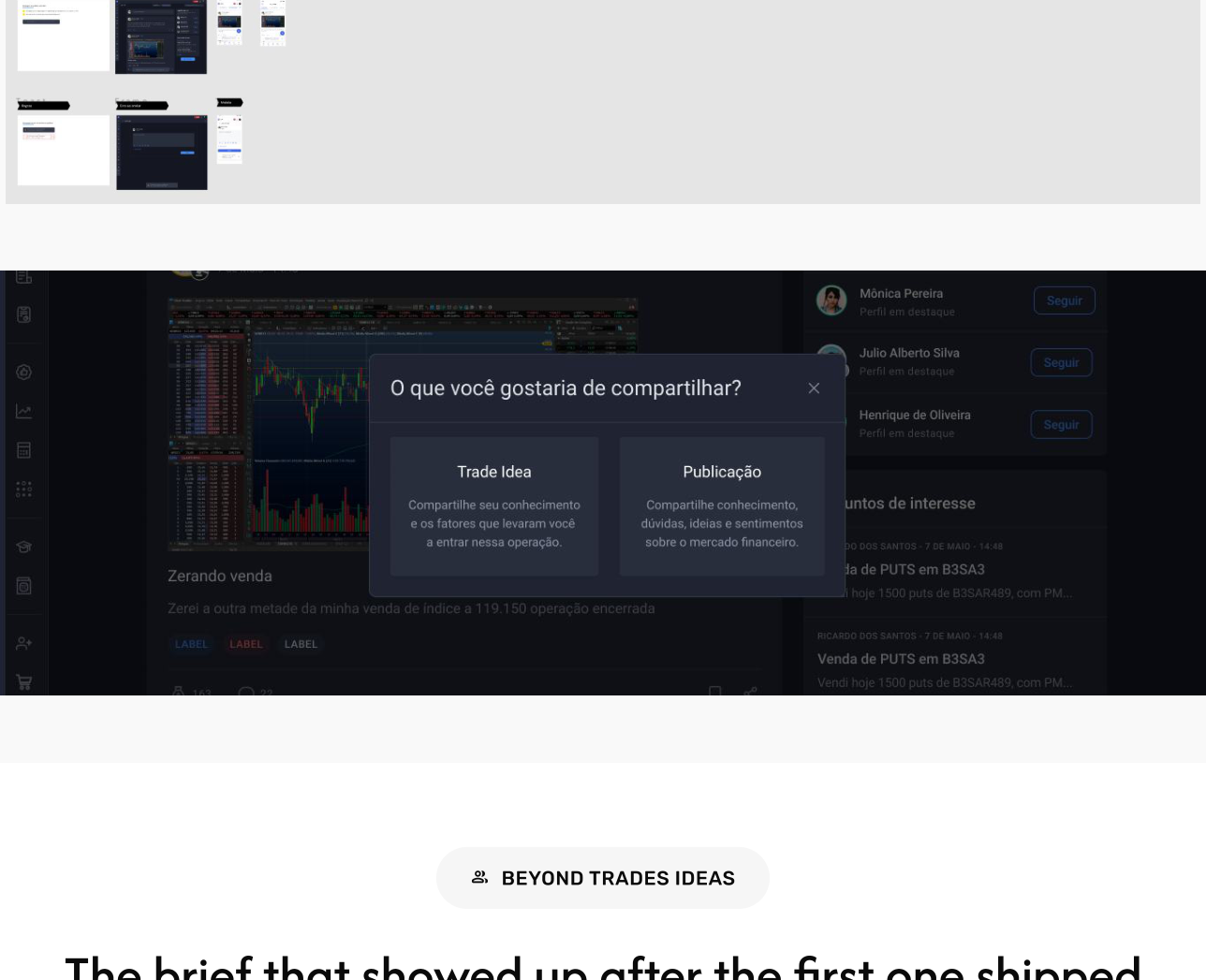
Full implementation hit technical debt. Instead of waiting, we shipped incrementally: a clearer posting modal separating "publishing a question" from "sharing trade rationale," reducing beginner posts that got flagged or banned.


We weren't able to fully implement it, but we already noticed a change in user behavior, especially among the more advanced users, as the MLP showed them it could be a way to stand out within the company and become a TC coordinator.
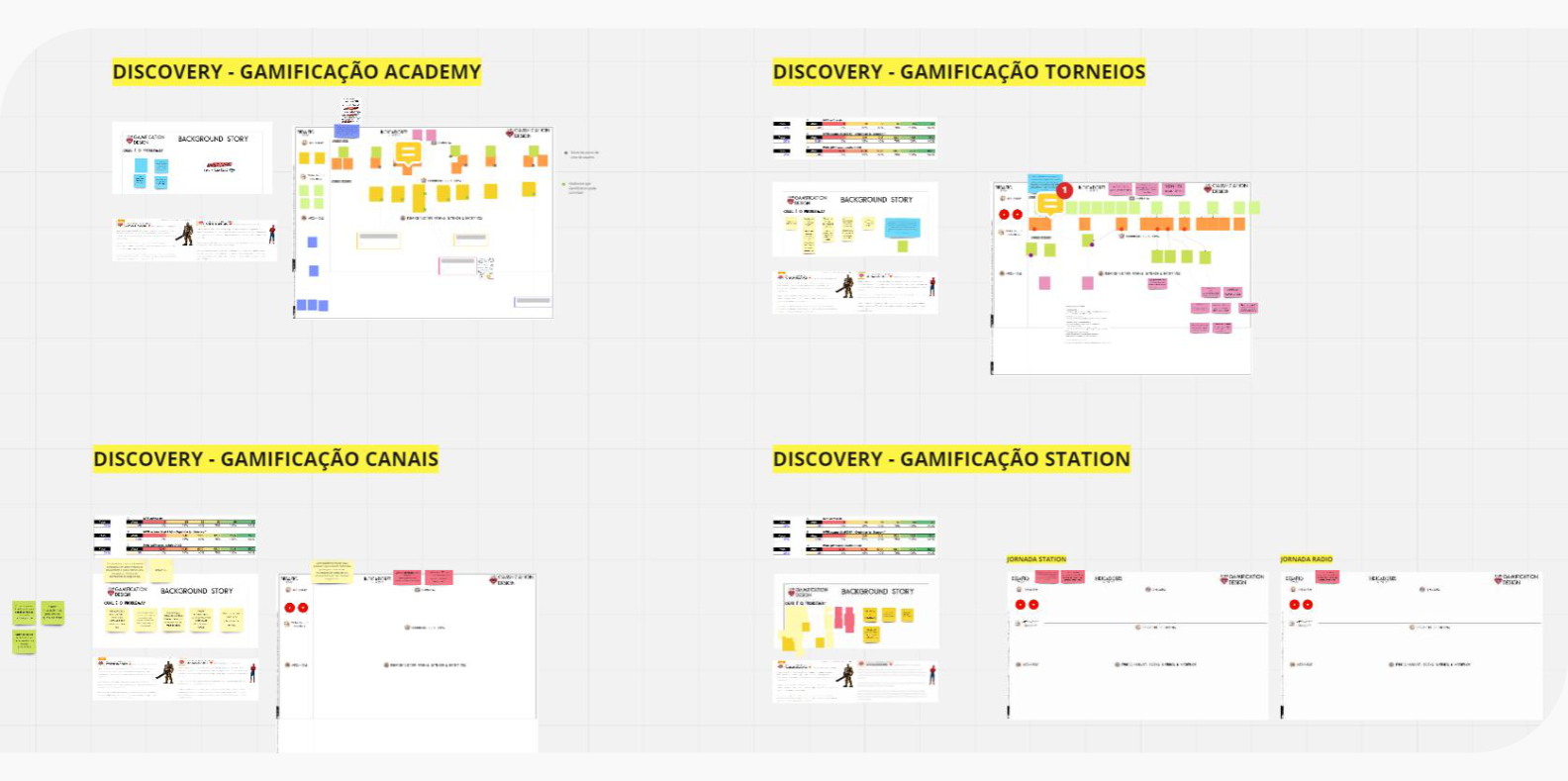
The redesign landed well enough that stakeholders asked me to review gamification across the platform: ideation with four other squads (Academy, Tournaments, Channels, Station), all built on the same research. It wasn't part of the original brief. It became the next one.

Retention and engagement tracking was never set up for the incremental releases. Today, analytics events go live before the feature does.
The email test validated the direction, but I never set a success baseline for the Q&A Area. That definition belongs to day one, with PM and data.
The debt surfaced mid-project and forced the scope cut. Mapping it in discovery would have made the incremental plan a choice, not a reaction.
Live rankings and badges aren't proof it works. They can reward the wrong behavior while looking like progress.
Status within the group, not points, moved users. We proved it before building anything.
Re-engagement chases dormant users by default. The ones most ready to grow were already inside.
A smaller real piece shipped taught more than waiting for the full system to unblock.
A full home redesign for Brazil's largest competitive gaming platform, shipped in 3 weeks. Making it appealing to our users and detailing all the interactions and user feedback.