The promoters were ready. The path didn't exist. So I built it.
A referral program built from zero across 4 countries, where the hardest design work wasn't the screens: it was the system around them.
A research ops redesign for a Brazilian gaming platform, where the real problem wasn't the survey tool: it was why anyone answered at all.
Gamers Club (GC) is the largest competitive gaming platform in Brazil, with a monthly active base of 149k players at the time. Research was central to how the product evolved: NPS, feature surveys, satisfaction tracking. All of it depended on users actually answering.
They mostly didn't. When we sent a survey to a selected audience of ~700 users, about 2% responded. Roughly 14 people. Far below any statistical minimum.
| Role | Product Designer (Senior) + Research OPS |
|---|---|
| Focus | Research OPS, Service Design, Business Model Design, Community Design |
| Collaborators | Product, Business, Marketing, Engineering, Finance |
| Timeline | 4 weeks | 2023 |
The company was in cost-cutting mode. With almost nobody responding, the money spent on the research tool was impossible to justify.
It looked like a procurement problem, not a design one at first.
from auditing the broken research process, to interviewing respondents, to designing the mechanism, to building the business case that turned it into a revenue channel.
I delivered the tool comparison that was asked. In parallel, I investigated the deeper problem: no tool, free or paid, would fix a 2% response rate.

While comparing tools, I went after a more basic question in parallel:
why did the users who responded actually respond?
Respondents earned game skins worth ~R$100.
But talking to participants, I learned the skins were old, with a devalued secondary market.
The incentive had lost its real value. And still, they kept answering. Why?
"to help the community," and "to have a way to show they were part of its history"
They felt part of Gamers Club and wanted to help it improve. That's why medals meant so much to them:
a medal on the profile was visible, permanent proof of having been there.

The old process: was waves of ~700 sends a week, chasing a usable sample for up to 3 weeks, with 2% responses. Even the entire base peaked at ~130 responses.
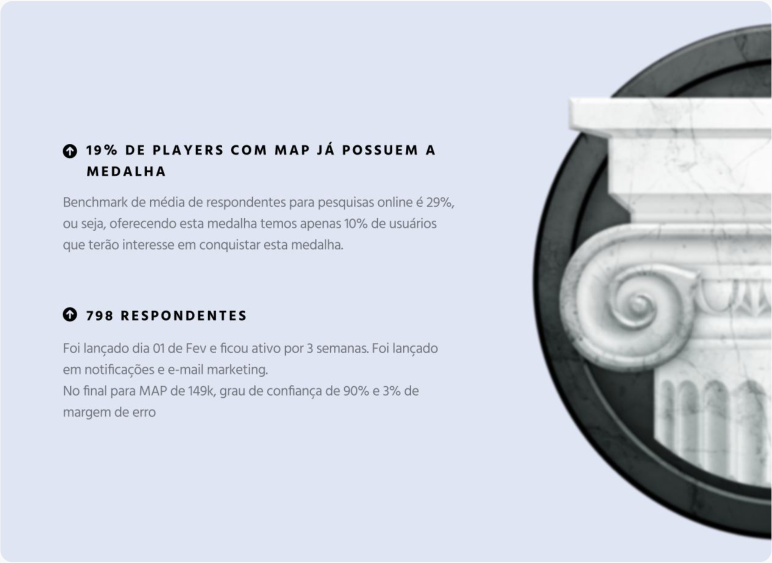
The medal data pointed to a way out: 19% of active players already held the community medal, against a 29% global benchmark for survey participation.
I tested it:
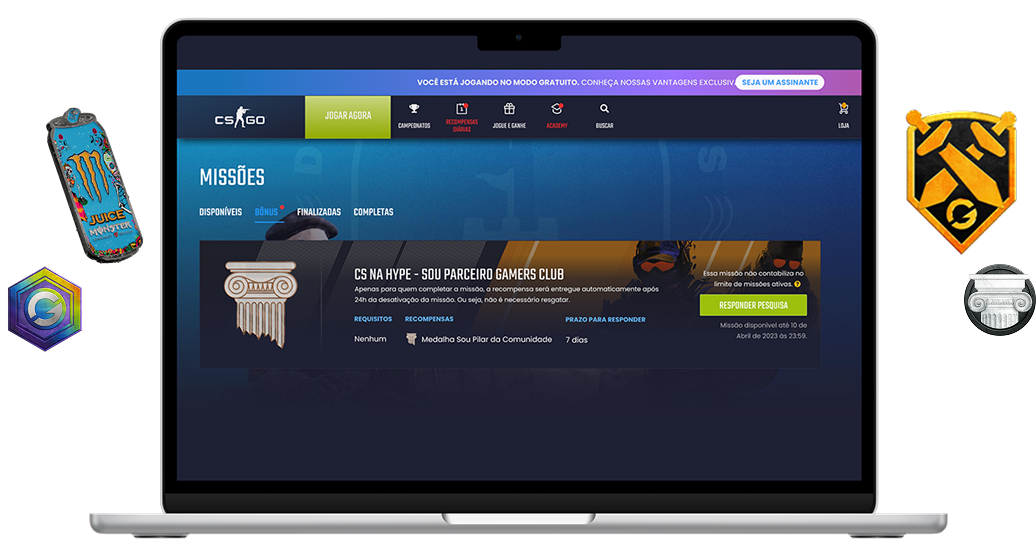
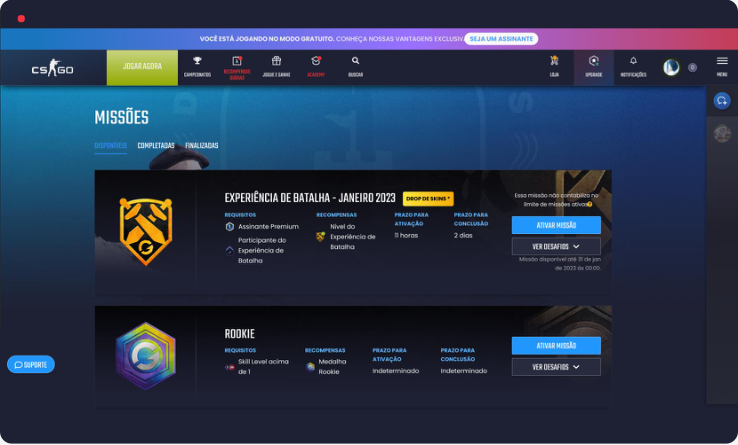
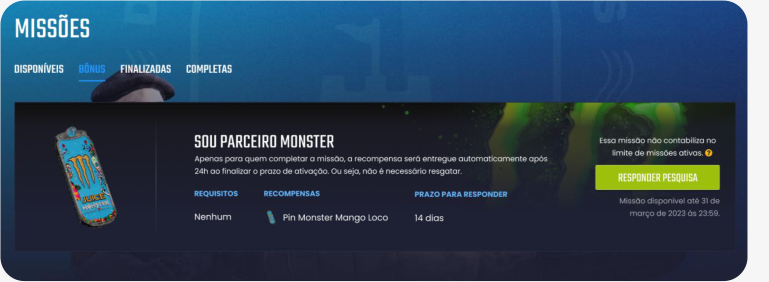
Looking at GC's own analytics, one page stood out: Missions.
The right mechanism already existed. It just wasn't connected to the research problem.

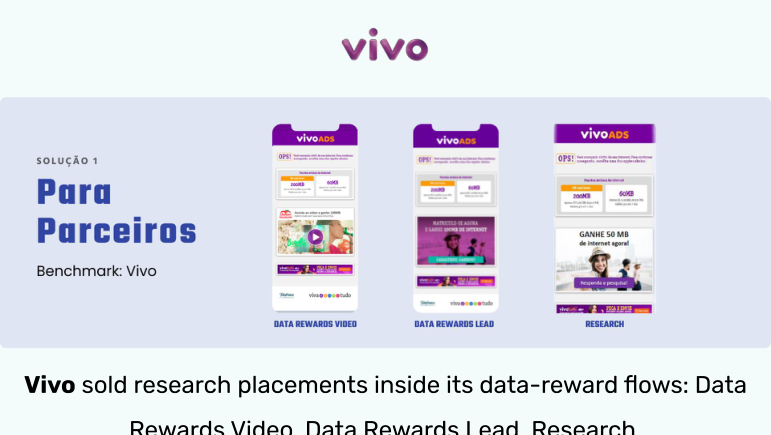
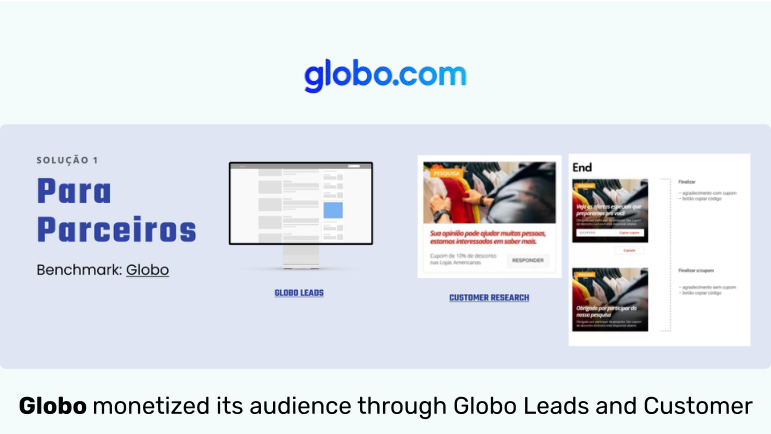
From an earlier Ads study, I had two market references:
Vivo sold research placements inside its data-reward flows: Data Rewards Video, Data Rewards Lead, Research.
Globo monetized its audience through Globo Leads and Customer Research.
GC was paying for answers its community wanted to give for free, with a reward nobody wanted, through a process too slow to be useful. The mechanism to fix it (Missions and medals) already existed inside the product.
Transform the Missions space into a sponsored research platform, aligning three sides:
Real data from a qualified gamer audience, not a passive ad.
A mission with a medal: permanent proof of being part of GC's history.
A new B2B revenue channel on existing infrastructure.
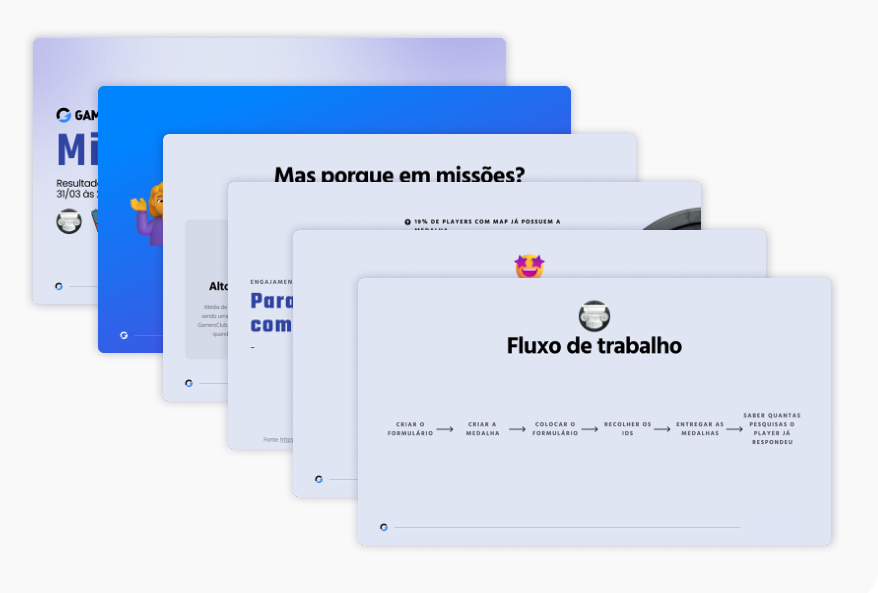
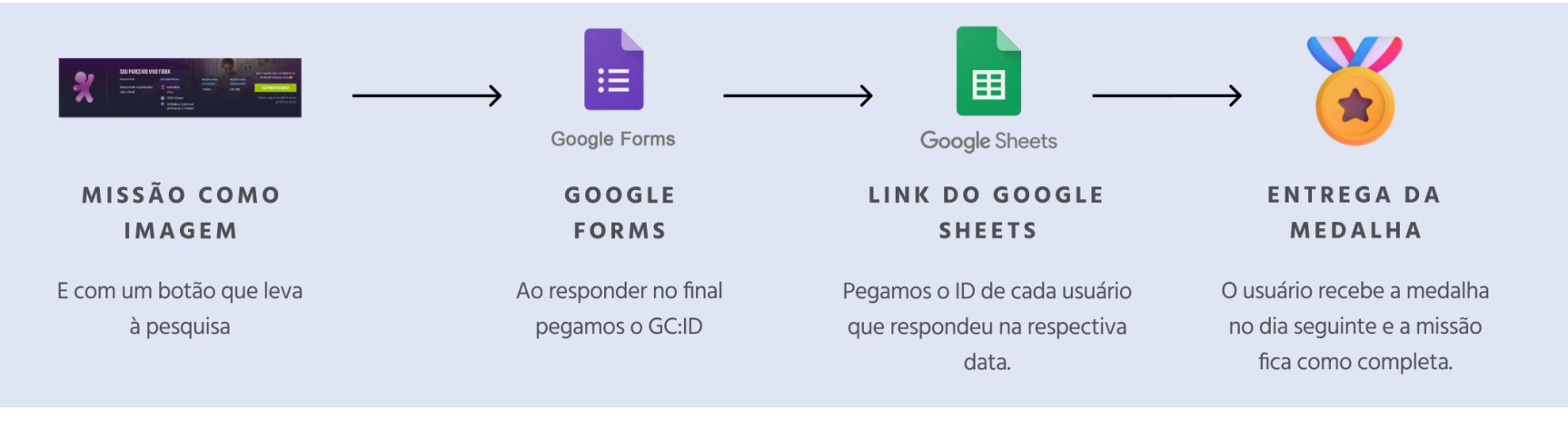
Implementation was designed to be fast:
Surveys written so their voice shaped GC's next experiences.
A banner identical to a native mission, since external links weren't supported, and the medal delivery system already existed.
Engineering estimated a 15-minute build. The pilot wouldn't generate cost.

The first pilot ran with an energy drink brand, March 20 to 31, 2023. Conditions were adverse:

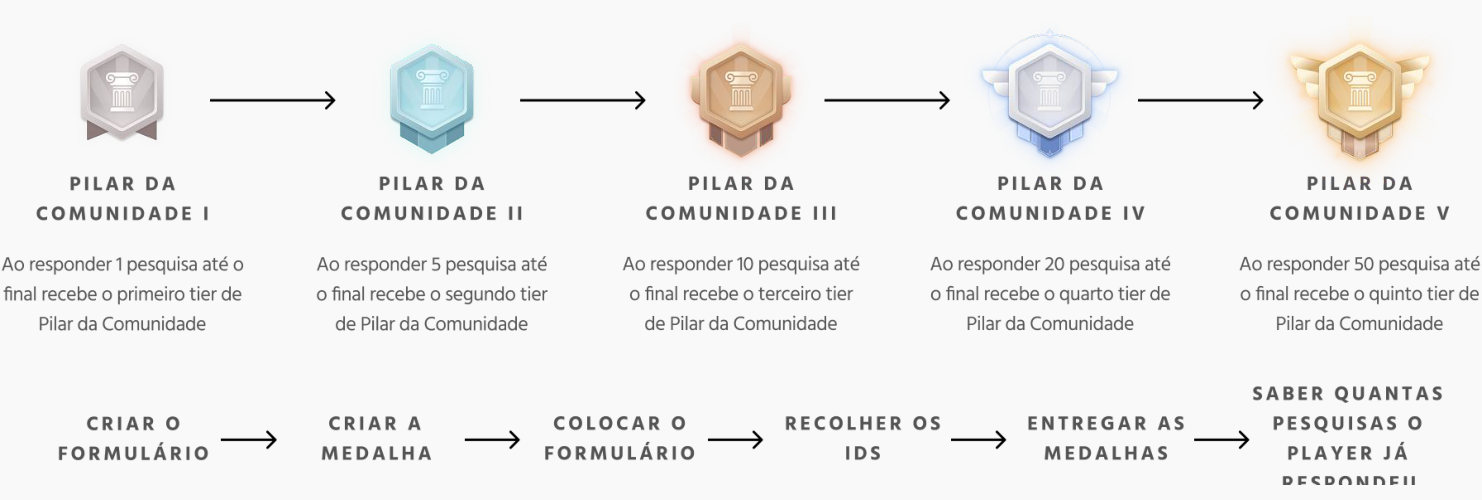
The insight didn't stop at sponsored research. If recognition was the real motivator, internal surveys could use it too. We created Community Medals, rewarding continuous participation in research.

The first partnership generated enough revenue to cover 2 months of the NPS tool, solving the original brief, plus buffer time for the company to evaluate building its own tool.
After I left, 4 new partnerships were closed using the model.
Defining pricing hypotheses and a sales owner before the pilot would have turned the first success into contracts faster.
Running a test with active push notifications would have established a fairer baseline and possibly yielded better research results.
"Find a free tool" was the visible request. The invisible problem was a broken value exchange with users.
Missions had the traffic, the habit, and the emotional weight. Connecting existing behavior beats inventing new behavior.
No workshop invented "to help the community." Users said it, repeatedly. The design work was honoring it.
The most valuable design decision in this project never touched a screen.
A referral program built from zero across 4 countries, where the hardest design work wasn't the screens: it was the system around them.